Meth Addiction: Warning Signs and Treatment Options
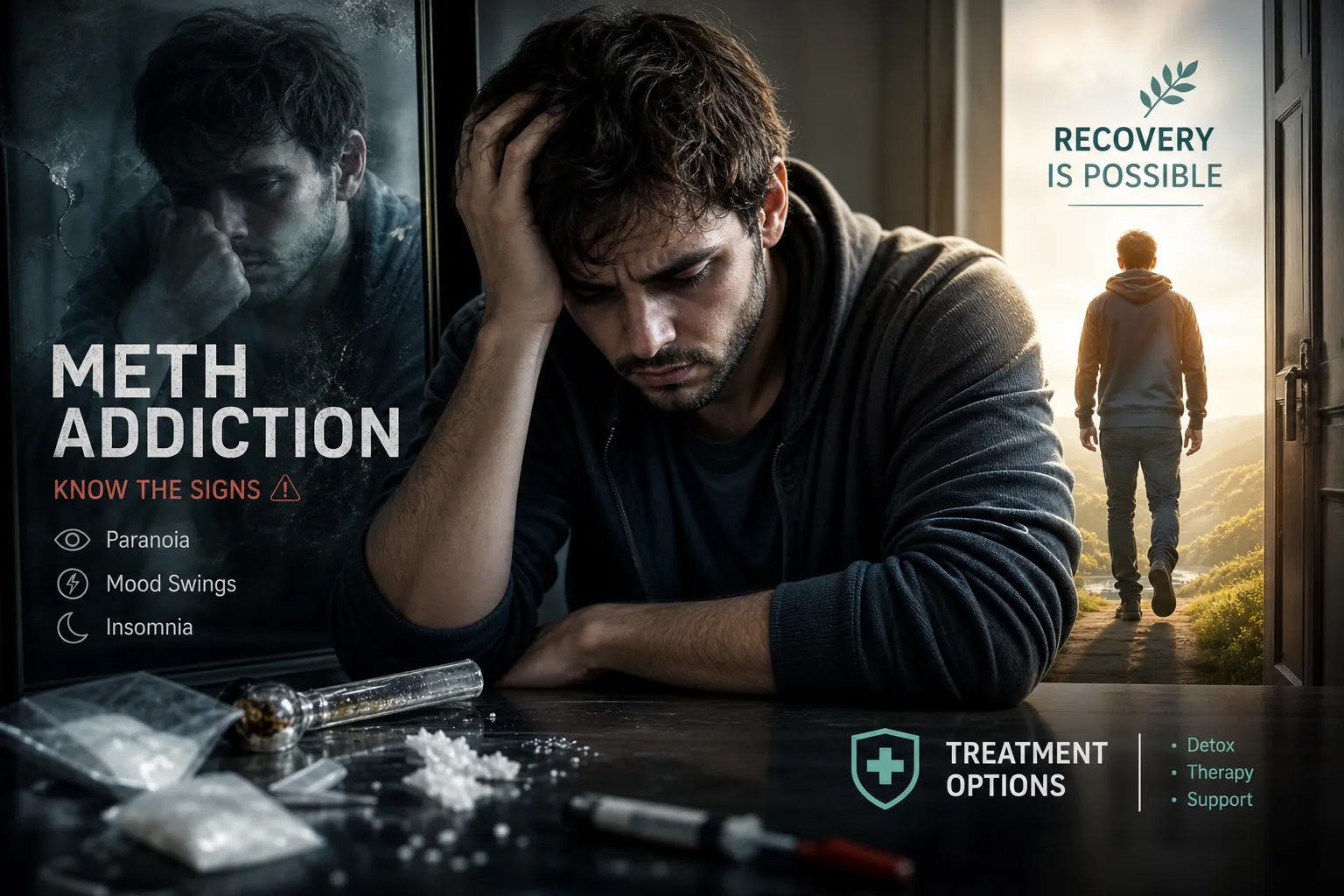
Roughly 2.4 million Americans reported past-year methamphetamine use in 2024, and rising meth addiction rates have pushed the share of people entering treatment for stimulant use disorder to nearly double over the past decade. Those numbers tell part of the story. What they don't capture is the confusion that surrounds this drug: the months families spend watching someone they love change before they understand what they're seeing, or the time a person spends minimizing their own use before recognizing they've lost control. Crystal meth, or "ice," doesn't announce itself clearly. It hides behind exhaustion, stress, and the slow erosion of everything that once mattered.
Meth addiction is a medical condition, not a character flaw or a failure of willpower. That distinction matters, because it changes what the right response looks like. This article lays out what meth addiction actually looks like from the outside and the inside, what it does to the brain and body over time, how withdrawal unfolds, and what treatment options have the strongest evidence behind them. Evidence-based outpatient programs, including those available here in the Treasure Valley through Honor Behavioral Health, have helped people at every stage of this disorder rebuild their lives without uprooting them entirely.
How meth addiction develops
Why meth is uniquely addictive
Methamphetamine floods the brain with dopamine at levels that natural rewards, things like food, connection, or accomplishment, simply cannot match. Unlike alcohol, which depresses the central nervous system, meth is a powerful stimulant that hijacks the brain's reward circuitry rapidly and aggressively. The brain responds by scaling back its own dopamine production and reducing the number of receptors available, which means the person needs more of the drug just to feel normal, let alone good. For some people, tolerance and diminishing pleasure can begin to develop rapidly, though the pace varies considerably from person to person.
What compounds this further is that meth also damages the dopamine system structurally over time. The very thing the person is chasing becomes harder to feel, which drives compulsive use even when the high itself is no longer enjoyable, leaving the person using not for pleasure but simply to function.
From first use to stimulant use disorder
The progression often follows a recognizable pattern: recreational or social use, then increased frequency to manage stress, fatigue, or low mood, then physical dependence, and finally compulsive use despite serious consequences at work, at home, and in the body. Given meth's potency, some people experience this progression over months rather than years, though individual trajectories vary widely depending on frequency of use, biology, and social context. Stimulant use disorder is a clinical diagnosis with defined criteria. Reaching that point does not mean treatment won't work; it means professional support is necessary for recovery to be sustainable.
Physical and behavioral warning signs to know
What meth does to the body
The physical signs of active meth use are often visible and progressive. They include dramatic weight loss, dilated pupils, rapid eye movements, severe dental decay commonly called "meth mouth," skin sores and scarring from compulsive picking, tremors, jaw clenching, and sweating. Sleep cycles become severely disrupted, with a person staying awake for days at a time followed by prolonged crashes. In many cases, physical deterioration becomes apparent over weeks of heavy use, a pace that can catch families off guard before they fully recognize what they're witnessing.
Behavioral and psychological red flags
The behavioral picture is equally striking once you know what to look for. Bursts of unusually high energy give way to extreme withdrawal. Speech becomes rapid and pressured. Repetitive, purposeless movements are common. Paranoia can intensify to the point of hallucinations and delusions, and mood swings between aggression and despair can be severe. As use continues, work attendance, relationships, hygiene, and financial responsibility all begin to erode. These changes reflect what is happening inside the brain, not choices the person is consciously making.
When meth use becomes a medical emergency
Chest pain, seizures, dangerously high body temperature, severe confusion, and suicidal thoughts are emergencies. Call 911 immediately. When you reach the dispatcher, report the symptoms clearly and mention any substances involved so responders arrive prepared. Do not wait for symptoms to pass on their own.
What prolonged meth use does to the brain and body
Short-term dangers that can turn fatal
Acute methamphetamine use carries serious cardiovascular risks: heart attack, stroke, and dangerous arrhythmias are all documented complications. Overdose, sometimes called "overamping," can produce hyperthermia, seizures, delirium, kidney failure, and death. Meth-induced psychosis, including paranoia and hallucinations, can occur even after a single heavy session. There is also a critical and underappreciated danger in the current drug supply: CDC data show that approximately 43% of stimulant-involved overdose deaths also involved opioids, meaning fentanyl contamination of the meth supply is making use genuinely life-threatening in ways many people do not anticipate.
Long-term damage that persists into recovery
Chronic meth use produces measurable structural changes in the brain affecting memory, motor control, and emotional regulation. Persistent depression and anhedonia, the inability to feel pleasure, are common even months into abstinence. Heart disease, kidney and liver damage, severe malnutrition, and research suggesting an elevated risk of Parkinson's-like movement disorders are among the documented long-term consequences. What matters most is that many of these effects improve meaningfully with sustained recovery and proper treatment. Seeking help sooner genuinely changes the outcome.
Meth withdrawal: what the crash feels like and how long it lasts
The first 72 hours
When someone stops using meth, the crash begins quickly. Intense fatigue, prolonged sleep, increased appetite, headaches, body aches, and a profound drop in mood are typical as the brain attempts to recalibrate without stimulation. This phase is physically miserable. It is not typically medically dangerous in the way opioid withdrawal can be, but the psychological symptoms, particularly depression and early cravings, require close attention and support.
Meth withdrawal timeline through the first two weeks
Symptoms generally peak around days one through three, begin easing between days four and ten, and acute meth withdrawal resolves for most people within seven to fourteen days, based on clinical withdrawal research. That said, depression, low motivation, cognitive fog, vivid dreams, and strong cravings can persist for weeks or months afterward, particularly following heavy or long-term amphetamine addiction. The timeline varies based on how long the person used, how much they used, their sleep and nutritional status, and whether other substances were involved.
Why supervised withdrawal support changes outcomes
There is no FDA-approved medication specifically for methamphetamine withdrawal. What does exist, and what matters significantly, is supportive care: sleep assistance, nutritional support, emotional monitoring, and professional presence during that difficult window. Clinical support during meth withdrawal can improve linkage to ongoing treatment and reduce the immediate risk of returning to use to relieve discomfort. Getting through the crash with help in place is not just more comfortable; it is strategically important for what comes next.
Meth addiction treatment options with the strongest evidence
Behavioral therapies with the strongest evidence
The most important thing to understand about meth addiction treatment is that effective options exist, and they work. Contingency management (CM) has the strongest and most consistent evidence base for methamphetamine use disorder. It uses small, tangible incentives such as vouchers or gift cards for negative drug tests and treatment attendance, and research shows participants are roughly 2.4 times more likely to submit stimulant-negative samples during treatment compared to those in standard care alone. Cognitive Behavioral Therapy (CBT) builds practical skills for identifying triggers, managing cravings, and preventing relapse. Motivational interviewing strengthens readiness to change, especially in the early stages of treatment.
The Matrix Model, a structured intensive outpatient approach developed specifically for stimulant use disorder, combines CBT, relapse prevention, family education, drug testing, and social support. In the major multisite Methamphetamine Treatment Project, Matrix participants were 27% more likely to complete treatment and 31% more likely to provide methamphetamine-negative urine tests during treatment than those in standard care. These are not small differences; they represent real people staying in treatment long enough for recovery to take hold.
Outpatient programs: IOP and PHP for meth recovery
Intensive Outpatient Programs (IOP) and Partial Hospitalization Programs (PHP) deliver structured clinical care while allowing people to remain at home, keep their jobs, and stay connected to family. These levels of care are particularly well-suited to meth addiction treatment when residential care is not necessary or not feasible. At Honor Behavioral Health in Boise, IOP and PHP programs are built around evidence-based methods and include dual diagnosis support for the depression, anxiety, trauma, and PTSD that frequently accompany meth addiction. Clients move through a full continuum of care within a single program, without needing to switch providers as their needs change.
Treating co-occurring mental health conditions
Meth addiction and mental health disorders rarely appear in isolation. Major depression is among the most frequently co-occurring diagnoses, followed by anxiety disorders, PTSD, and bipolar spectrum conditions. Untreated depression or unaddressed trauma are among the most common drivers of relapse. Integrated dual diagnosis care, where substance use and mental health conditions are treated simultaneously by the same clinical team, is not a bonus feature of good treatment. It is central to sustainable recovery. Any quality meth treatment program should assess and treat co-occurring conditions from the first day of care.
Where to find help right now
Crisis lines and immediate resources
If you or someone you know is in crisis, help is available right now. Call or text 988 to reach the Suicide and Crisis Lifeline, which covers both mental health crises and substance use emergencies. The SAMHSA National Helpline at 1-800-662-4357 is free, confidential, and available 24 hours a day, seven days a week; they can help connect you with local treatment resources regardless of insurance status. For immediate physical danger or suspected overdose, call 911.
Taking the first step toward meth addiction treatment
Reaching out for a confidential assessment is the first step, and it does not require having everything figured out first. Honor Behavioral Health in Boise offers accessible IOP and PHP programs for people in the Treasure Valley, accepts most major insurance plans, and can connect those who are not yet ready for outpatient treatment with appropriate detox referrals. The goal is to meet people where they are, not where they think they should be. Recovery from meth addiction is real and documented, it is happening in Boise and across Idaho every single day.
What comes next is your decision to make
Recognizing meth addiction, whether in yourself or someone you love, is one of the hardest things to do. It requires looking directly at something painful and calling it what it is. But stimulant use disorder is a treatable medical condition, and the combination of behavioral therapies, structured outpatient programs, and co-occurring disorder support gives people a real, documented path forward.
The warning signs covered here, the physical deterioration, the behavioral shifts, the psychological changes, are not evidence of a broken person. They are symptoms of a condition that responds to treatment. The health consequences are serious, but many are reversible with sustained recovery. Meth withdrawal is difficult but manageable with proper support. And the treatment options available today, particularly contingency management, CBT, and the Matrix Model delivered through intensive outpatient care, are backed by real clinical evidence.
If what you've read sounds familiar, don't wait for things to get worse. Connect directly with Honor Behavioral Health in Boise to learn what level of care fits your situation, or call the SAMHSA helpline at 1-800-662-4357 to explore local treatment resources near you. A single conversation is enough to start.
Frequently asked questions about meth addiction
How long does meth addiction withdrawal last?
Acute meth withdrawal typically peaks within the first one to three days and resolves for most people within seven to fourteen days. However, lingering symptoms such as depression, low motivation, and strong cravings can persist for several weeks or months, especially after prolonged heavy use. Clinical support during this window significantly improves the chances of staying engaged with treatment.
What are the most effective treatments for meth addiction?
The treatments with the strongest clinical evidence for meth addiction include contingency management, Cognitive Behavioral Therapy (CBT), motivational interviewing, and the Matrix Model. These approaches are often delivered through Intensive Outpatient Programs (IOP) or Partial Hospitalization Programs (PHP), which allow people to receive structured care while continuing to live at home.
Is meth addiction treatable?
Yes. Meth addiction is a treatable medical condition. Research consistently shows that people who engage with evidence-based outpatient treatment, particularly programs that address co-occurring mental health conditions alongside substance use, achieve meaningful, lasting recovery. The earlier treatment begins, the better the outcomes tend to be.